

Sleep Apnea Device Market Growth Insights & Expansion Trends (Article 3 of 20)
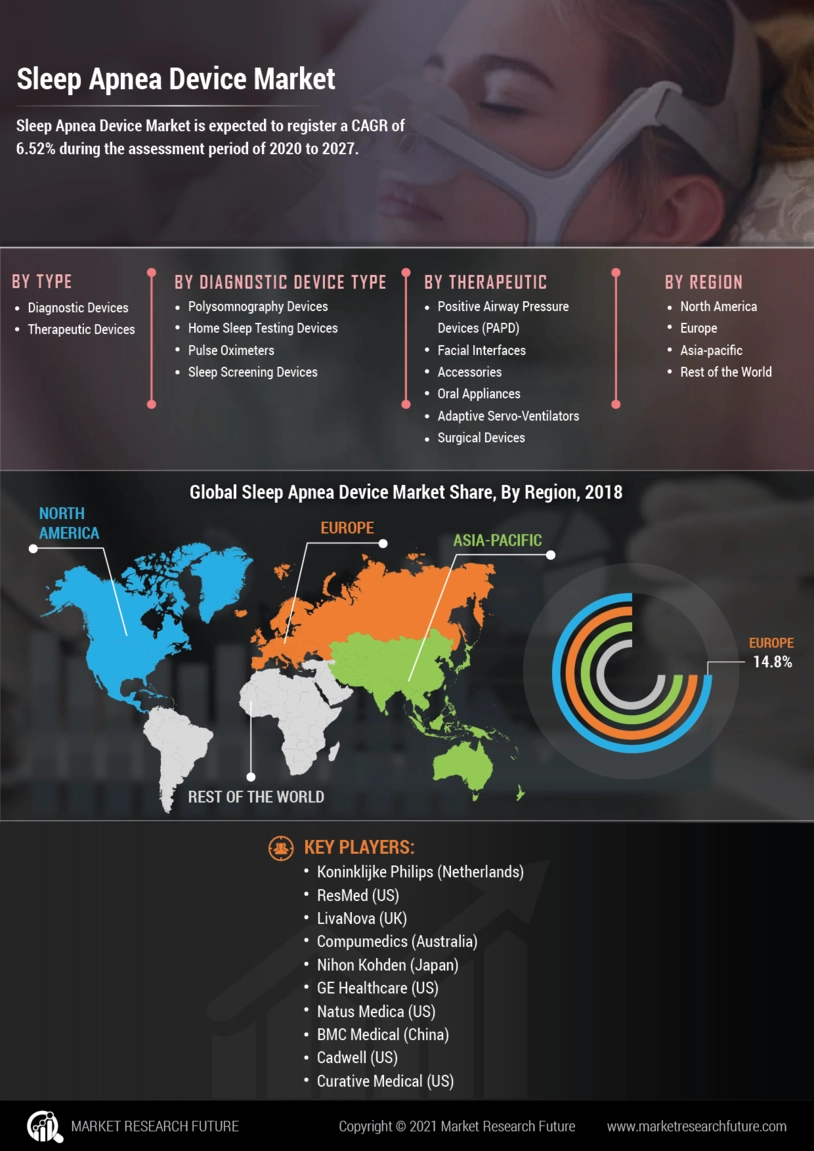
The Sleep Apnea Device Market is experiencing robust expansion due to the growing prevalence of obstructive sleep apnea (OSA), increased awareness of sleep‑related disorders, and continuous advancements in both therapeutic and diagnostic technologies. Recent market intelligence highlights that the global sleep apnea devices market was valued at approximately USD 9.70 billion in 2024 and is projected to reach USD 24.4 billion by 2035, reflecting a strong compound annual growth rate over the forecast period. This growth is driven by rising incidence of lifestyle‑associated diseases such as obesity, cardiovascular disorders, and hypertension — all of which increase the risk of sleep apnea — as well as heightened public focus on early detection and treatment. North America remains a dominant regional player, accounting for nearly half of the market share in 2024, largely due to well‑established healthcare infrastructure, high adoption of advanced devices, and favorable reimbursement policies. Alongside traditional continuous positive airway pressure (CPAP) systems, newer technologies such as adaptive servo‑ventilation (ASV), bi‑level positive airway pressure (BiPAP), and emerging wearable diagnostic tools are gaining traction, offering enhanced patient comfort and improved adherence rates. These trends underscore the importance of exploring Sleep Apnea Device Market growth
to understand future opportunities and competitive positioning.
Get Full Reports:https://www.marketresearchfuture.com/reports/sleep-apnea-devices-market-2061
Market dynamics are further influenced by rapid developments in home‑based care solutions and telemonitoring capabilities that enable remote treatment management and improved patient engagement. Europe and Asia‑Pacific are also witnessing significant growth, with Asia‑Pacific especially poised for accelerated expansion due to increasing healthcare investment, rising awareness campaigns, and expansion of sleep clinics and diagnostic laboratories. Manufacturers are focusing on integrating smart connectivity, artificial intelligence, and data analytics into devices to facilitate personalized therapy adjustments, real‑time monitoring, and predictive analytics. Additionally, an expanding end‑user base that includes hospitals, sleep laboratories, and homecare settings — combined with strategic partnerships and product launches — is contributing to the overall market momentum. The increasing focus on comfort, usability, and connected ecosystems is expected to further drive demand across both developed and emerging regions, making the Sleep Apnea Device Market one of the fastest‑growing segments within the broader medical devices industry.
Frequently Asked Questions (FAQ)
Q1: What is the current size of the global sleep apnea devices market?
A1: In 2024, the global sleep apnea devices market was valued at around USD 9.70 billion, and it is expected to grow significantly in the coming decade.
Fortune Business Insights
Q2: What factors are driving growth in the sleep apnea device market?
A2: Key drivers include rising prevalence of OSA, increasing awareness of sleep disorders, technological advances in devices, and expansion of home monitoring solutions.
Future Market Insights
Q3: Which region currently leads the market?
A3: North America held the largest market share in 2024 due to advanced healthcare infrastructure and favorable reimbursement policies.
Fortune Business Insights
Q4: What types of devices are commonly used for sleep apnea?
A4: CPAP and BiPAP devices remain widely used, while newer technologies such as ASV and wearable monitoring tools are gaining adoption.
GlobeNewswire
Q5: What trends are shaping the future of this market?
A5: Growth is supported by smart connectivity, home‑based solutions, AI integrations, and expanded diagnostic capabilities across regions.
Future Market Insights
The Sleep Apnea Device Market is experiencing robust expansion due to the growing prevalence of obstructive sleep apnea (OSA), increased awareness of sleep‑related disorders, and continuous advancements in both therapeutic and diagnostic technologies. Recent market intelligence highlights that the global sleep apnea devices market was valued at approximately USD 9.70 billion in 2024 and is projected to reach USD 24.4 billion by 2035, reflecting a strong compound annual growth rate over the forecast period. This growth is driven by rising incidence of lifestyle‑associated diseases such as obesity, cardiovascular disorders, and hypertension — all of which increase the risk of sleep apnea — as well as heightened public focus on early detection and treatment. North America remains a dominant regional player, accounting for nearly half of the market share in 2024, largely due to well‑established healthcare infrastructure, high adoption of advanced devices, and favorable reimbursement policies. Alongside traditional continuous positive airway pressure (CPAP) systems, newer technologies such as adaptive servo‑ventilation (ASV), bi‑level positive airway pressure (BiPAP), and emerging wearable diagnostic tools are gaining traction, offering enhanced patient comfort and improved adherence rates. These trends underscore the importance of exploring Sleep Apnea Device Market growth
to understand future opportunities and competitive positioning.
Get Full Reports:https://www.marketresearchfuture.com/reports/sleep-apnea-devices-market-2061
Market dynamics are further influenced by rapid developments in home‑based care solutions and telemonitoring capabilities that enable remote treatment management and improved patient engagement. Europe and Asia‑Pacific are also witnessing significant growth, with Asia‑Pacific especially poised for accelerated expansion due to increasing healthcare investment, rising awareness campaigns, and expansion of sleep clinics and diagnostic laboratories. Manufacturers are focusing on integrating smart connectivity, artificial intelligence, and data analytics into devices to facilitate personalized therapy adjustments, real‑time monitoring, and predictive analytics. Additionally, an expanding end‑user base that includes hospitals, sleep laboratories, and homecare settings — combined with strategic partnerships and product launches — is contributing to the overall market momentum. The increasing focus on comfort, usability, and connected ecosystems is expected to further drive demand across both developed and emerging regions, making the Sleep Apnea Device Market one of the fastest‑growing segments within the broader medical devices industry.
Frequently Asked Questions (FAQ)
Q1: What is the current size of the global sleep apnea devices market?
A1: In 2024, the global sleep apnea devices market was valued at around USD 9.70 billion, and it is expected to grow significantly in the coming decade.
Fortune Business Insights
Q2: What factors are driving growth in the sleep apnea device market?
A2: Key drivers include rising prevalence of OSA, increasing awareness of sleep disorders, technological advances in devices, and expansion of home monitoring solutions.
Future Market Insights
Q3: Which region currently leads the market?
A3: North America held the largest market share in 2024 due to advanced healthcare infrastructure and favorable reimbursement policies.
Fortune Business Insights
Q4: What types of devices are commonly used for sleep apnea?
A4: CPAP and BiPAP devices remain widely used, while newer technologies such as ASV and wearable monitoring tools are gaining adoption.
GlobeNewswire
Q5: What trends are shaping the future of this market?
A5: Growth is supported by smart connectivity, home‑based solutions, AI integrations, and expanded diagnostic capabilities across regions.
Future Market Insights
Sleep Apnea Device Market Growth Insights & Expansion Trends (Article 3 of 20)
The Sleep Apnea Device Market is experiencing robust expansion due to the growing prevalence of obstructive sleep apnea (OSA), increased awareness of sleep‑related disorders, and continuous advancements in both therapeutic and diagnostic technologies. Recent market intelligence highlights that the global sleep apnea devices market was valued at approximately USD 9.70 billion in 2024 and is projected to reach USD 24.4 billion by 2035, reflecting a strong compound annual growth rate over the forecast period. This growth is driven by rising incidence of lifestyle‑associated diseases such as obesity, cardiovascular disorders, and hypertension — all of which increase the risk of sleep apnea — as well as heightened public focus on early detection and treatment. North America remains a dominant regional player, accounting for nearly half of the market share in 2024, largely due to well‑established healthcare infrastructure, high adoption of advanced devices, and favorable reimbursement policies. Alongside traditional continuous positive airway pressure (CPAP) systems, newer technologies such as adaptive servo‑ventilation (ASV), bi‑level positive airway pressure (BiPAP), and emerging wearable diagnostic tools are gaining traction, offering enhanced patient comfort and improved adherence rates. These trends underscore the importance of exploring Sleep Apnea Device Market growth
to understand future opportunities and competitive positioning.
Get Full Reports:https://www.marketresearchfuture.com/reports/sleep-apnea-devices-market-2061
Market dynamics are further influenced by rapid developments in home‑based care solutions and telemonitoring capabilities that enable remote treatment management and improved patient engagement. Europe and Asia‑Pacific are also witnessing significant growth, with Asia‑Pacific especially poised for accelerated expansion due to increasing healthcare investment, rising awareness campaigns, and expansion of sleep clinics and diagnostic laboratories. Manufacturers are focusing on integrating smart connectivity, artificial intelligence, and data analytics into devices to facilitate personalized therapy adjustments, real‑time monitoring, and predictive analytics. Additionally, an expanding end‑user base that includes hospitals, sleep laboratories, and homecare settings — combined with strategic partnerships and product launches — is contributing to the overall market momentum. The increasing focus on comfort, usability, and connected ecosystems is expected to further drive demand across both developed and emerging regions, making the Sleep Apnea Device Market one of the fastest‑growing segments within the broader medical devices industry.
Frequently Asked Questions (FAQ)
Q1: What is the current size of the global sleep apnea devices market?
A1: In 2024, the global sleep apnea devices market was valued at around USD 9.70 billion, and it is expected to grow significantly in the coming decade.
Fortune Business Insights
Q2: What factors are driving growth in the sleep apnea device market?
A2: Key drivers include rising prevalence of OSA, increasing awareness of sleep disorders, technological advances in devices, and expansion of home monitoring solutions.
Future Market Insights
Q3: Which region currently leads the market?
A3: North America held the largest market share in 2024 due to advanced healthcare infrastructure and favorable reimbursement policies.
Fortune Business Insights
Q4: What types of devices are commonly used for sleep apnea?
A4: CPAP and BiPAP devices remain widely used, while newer technologies such as ASV and wearable monitoring tools are gaining adoption.
GlobeNewswire
Q5: What trends are shaping the future of this market?
A5: Growth is supported by smart connectivity, home‑based solutions, AI integrations, and expanded diagnostic capabilities across regions.
Future Market Insights
0 Commentarios
0 Acciones
64 Views
0 Vista previa



 فارسی
فارسی
 English
 French
 Portuguese
 Deutsch
 Turkish
 Dutch
Dutch
 Italiano
 Russian
 Romaian
 Portuguese (Brazil)
 Greek
Greek
 Arabic